CX-0005 Item Relationship Service APIAPI An API is a way for two or more computer programs to communicate with each other. 2.1.1
FOR WHOM IS THE STANDARD DESIGNED
COMPARISON WITH THE PREVIOUS VERSION OF THE STANDARD
Relevant only for existing standards. At the new standard, please delete
ABSTRACT
Today, a large amount of data is stored among different participants in a supply chain of an industry. The value of the data can be enhanced immensely by connecting the data to their related context.
To enable cross-enterprise linked data, standards such as aspect modelsAspect Model A formal, machine-readable semantic description (expressed with RDF/Turtle) of data accessible from an aspect. Note 1: An Aspect Model must adhere to the Semantic Aspect Meta Model (SAMM) and be compliant with its validity rules. Note 2: Aspect Models are logical data models that can be used to detail a conceptual model to describe the semantics of runtime data related to a concept; elements of an Aspect Model can/should refer to terms of a standardized Business Glossary (if existing)., standardized protocols, and standardized ways to connect the data are applied. One of the first FOSS solutions to be developed in Catena-X for accessing cross-enterprise linked data is the Item Relationship Service. This document aims to standardize the APIAPI An API is a way for two or more computer programs to communicate with each other. of the service so that any new participant can access this interface to build new solutions based on data chains. Connected data, so-called data chains, are seen as a valuable assetAsset On the Data Provider side, an Asset describes the data set which will be shared or can be consumed by a Data Consumer. for the consortia that serve as an enabler technology for other Use-Cases to build solutions on.
1 INTRODUCTION
1.1 AUDIENCE & SCOPE
This section is non-normative
List for which roles the standard is relevant:
- Core Service Provider
- Data Provider / Consumer
- Business Application Provider
- Enablement Service Provider
- Consulting Provider
This Standard applies for Applications, which want to access Data Chains, and provide an interoperable Solution for the Catena-X Network. To the time being of writing this document there are Traceability Aspect ModelsAspect Model A formal, machine-readable semantic description (expressed with RDF/Turtle) of data accessible from an aspect. Note 1: An Aspect Model must adhere to the Semantic Aspect Meta Model (SAMM) and be compliant with its validity rules. Note 2: Aspect Models are logical data models that can be used to detail a conceptual model to describe the semantics of runtime data related to a concept; elements of an Aspect Model can/should refer to terms of a standardized Business Glossary (if existing). which build data chains. So, this applies to the Traceability Business Domain.
1.2 CONTEXT AND ARCHITECTURE FIT
This section is non-normative
This standardization is built upon existing standards, such as
- “EDC Discovery APIAPI An API is a way for two or more computer programs to communicate with each other." [CX-0001]
- “Digital Twins in Catena-X“ [CX-0002]
- “SAMM Semantic Aspect Meta Model“ [CX-0003]
- “BusinessPartnerNumber“ [CX-0010]
- “Dataspace Connectivity v3.0.0” [CX-0018]
- “Implementation Specification: Data Provisioning for Release 2” [CX-0024]
- “Aspect ModelAspect Model A formal, machine-readable semantic description (expressed with RDF/Turtle) of data accessible from an aspect. Note 1: An Aspect Model must adhere to the Semantic Aspect Meta Model (SAMM) and be compliant with its validity rules. Note 2: Aspect Models are logical data models that can be used to detail a conceptual model to describe the semantics of runtime data related to a concept; elements of an Aspect Model can/should refer to terms of a standardized Business Glossary (if existing).: DataModelBoMAsSpecified“ [CX-0030]
- “Aspect ModelAspect Model A formal, machine-readable semantic description (expressed with RDF/Turtle) of data accessible from an aspect. Note 1: An Aspect Model must adhere to the Semantic Aspect Meta Model (SAMM) and be compliant with its validity rules. Note 2: Aspect Models are logical data models that can be used to detail a conceptual model to describe the semantics of runtime data related to a concept; elements of an Aspect Model can/should refer to terms of a standardized Business Glossary (if existing).: DataModelPartAsSpecified“ [CX-0032]
- “Aspect ModelAspect Model A formal, machine-readable semantic description (expressed with RDF/Turtle) of data accessible from an aspect. Note 1: An Aspect Model must adhere to the Semantic Aspect Meta Model (SAMM) and be compliant with its validity rules. Note 2: Aspect Models are logical data models that can be used to detail a conceptual model to describe the semantics of runtime data related to a concept; elements of an Aspect Model can/should refer to terms of a standardized Business Glossary (if existing).: PartSiteInformationAsPlanned" [CX-0094]
- “TraceabilityUseCase“ [CX-0125]
- "Industry Core: Part InstancePart Instance A Part Instance is a physically produced instance (e.g., serialized part, batch, just-in-sequence part) of a Part Type." [CX-0127]
- "Industry Core: Part Type" [CX-0126]
further Aspects which conclude in connecting Digital Twins between each other will be added to the Semantic Hub.
The following aspect modelsAspect Model A formal, machine-readable semantic description (expressed with RDF/Turtle) of data accessible from an aspect. Note 1: An Aspect Model must adhere to the Semantic Aspect Meta Model (SAMM) and be compliant with its validity rules. Note 2: Aspect Models are logical data models that can be used to detail a conceptual model to describe the semantics of runtime data related to a concept; elements of an Aspect Model can/should refer to terms of a standardized Business Glossary (if existing). are also relevant:
- “Aspect ModelAspect Model A formal, machine-readable semantic description (expressed with RDF/Turtle) of data accessible from an aspect. Note 1: An Aspect Model must adhere to the Semantic Aspect Meta Model (SAMM) and be compliant with its validity rules. Note 2: Aspect Models are logical data models that can be used to detail a conceptual model to describe the semantics of runtime data related to a concept; elements of an Aspect Model can/should refer to terms of a standardized Business Glossary (if existing).: SingleLevelUsageAsBuilt"
- “Aspect ModelAspect Model A formal, machine-readable semantic description (expressed with RDF/Turtle) of data accessible from an aspect. Note 1: An Aspect Model must adhere to the Semantic Aspect Meta Model (SAMM) and be compliant with its validity rules. Note 2: Aspect Models are logical data models that can be used to detail a conceptual model to describe the semantics of runtime data related to a concept; elements of an Aspect Model can/should refer to terms of a standardized Business Glossary (if existing).: SingleLevelUsageAsPlanned"
- “Aspect ModelAspect Model A formal, machine-readable semantic description (expressed with RDF/Turtle) of data accessible from an aspect. Note 1: An Aspect Model must adhere to the Semantic Aspect Meta Model (SAMM) and be compliant with its validity rules. Note 2: Aspect Models are logical data models that can be used to detail a conceptual model to describe the semantics of runtime data related to a concept; elements of an Aspect Model can/should refer to terms of a standardized Business Glossary (if existing).: JustInSequencePart"
- “Aspect ModelAspect Model A formal, machine-readable semantic description (expressed with RDF/Turtle) of data accessible from an aspect. Note 1: An Aspect Model must adhere to the Semantic Aspect Meta Model (SAMM) and be compliant with its validity rules. Note 2: Aspect Models are logical data models that can be used to detail a conceptual model to describe the semantics of runtime data related to a concept; elements of an Aspect Model can/should refer to terms of a standardized Business Glossary (if existing).: PartSiteInformationAsBuilt"
- “Aspect ModelAspect Model A formal, machine-readable semantic description (expressed with RDF/Turtle) of data accessible from an aspect. Note 1: An Aspect Model must adhere to the Semantic Aspect Meta Model (SAMM) and be compliant with its validity rules. Note 2: Aspect Models are logical data models that can be used to detail a conceptual model to describe the semantics of runtime data related to a concept; elements of an Aspect Model can/should refer to terms of a standardized Business Glossary (if existing).: PartSiteInformationAsPlanned"
Currently, no open Standard exists, which addresses this issue, based on the combination of the used standards like Aspect ModelsAspect Model A formal, machine-readable semantic description (expressed with RDF/Turtle) of data accessible from an aspect. Note 1: An Aspect Model must adhere to the Semantic Aspect Meta Model (SAMM) and be compliant with its validity rules. Note 2: Aspect Models are logical data models that can be used to detail a conceptual model to describe the semantics of runtime data related to a concept; elements of an Aspect Model can/should refer to terms of a standardized Business Glossary (if existing)., AAS (AssetAdministrationShell), EDC (Eclipse Dataspace Connector), and the Implementation specification it is a solution fit to the needs of Catena-X to simplify the interactions with data chains.
This APIAPI An API is a way for two or more computer programs to communicate with each other. has been designed to provide Interoperability within Catena-X on a Data Chain layer. Currently, this is being developed in the Tractus-X Eclipse FOSS project.
The IRS iterates through multiple digital twin aspects, which are representing a relationship. An example aspect is the SingleLevelBOMasBuilt aspect, which connects serialized partsSerialized part An instance of a part which can be uniquely identified by means of a serial number, a similar identifier (e.g., VAN), or a combination of identifiers (e.g., manufacturer + date + number). with each other, across company boundaries. This service is accessing the aspects of digital twins for which an EDC policy and data contract must exist.
The following general conditions apply:
- Access control through policies and contracts by the EDC
- Direct data exchange between supply-chain partners
- Catena-X partners of the accessible value chain are known to the data-consumer
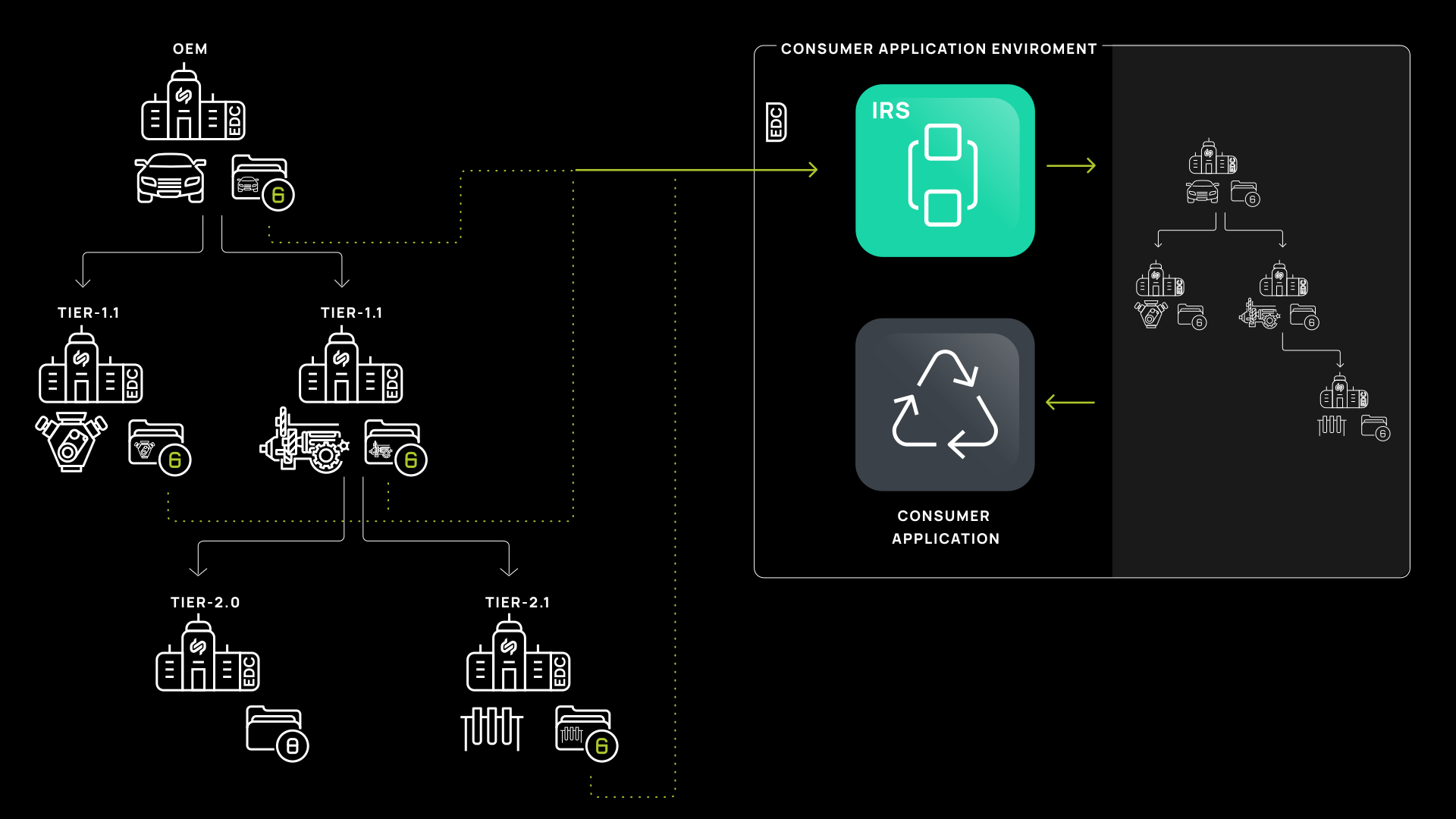 Figure 1: IRS in iterative mode
1.3 CONFORMANCE AND PROOF OF CONFORMITY
*This section is non-normative_
As well as sections marked as non-normative, all authoring guidelines, diagrams, examples, and notes in this specification are non-normative. Everything else in this specification is normative.
The key words MAY, MUST, MUST NOT, OPTIONAL, RECOMMENDED, REQUIRED, SHOULD and SHOULD NOT in this document document are to be interpreted as described in BCP 14 [RFC2119] [RFC8174] when, and only when, they appear in all capitals, as shown here.
All participants and their solutions will need to prove, that they are conform with the Catena-X standards. To validate that the standards are applied correctly, Catena-X employs Conformity Assessment Bodies (CABs).
To prove conformity with the IRS APIAPI An API is a way for two or more computer programs to communicate with each other. Standard provide the following assetsAsset On the Data Provider side, an Asset describes the data set which will be shared or can be consumed by a Data Consumer. to a conformity assessment body:
- APIAPI An API is a way for two or more computer programs to communicate with each other. Response of the Implementation MUST match to the response structure of the APIAPI An API is a way for two or more computer programs to communicate with each other. Documentation more information in the Data Chain KIT
1.4 EXAMPLES
Examples and further information are being shared in the Data Chain KIT and in the Tractus-X Github Repository
1.5 TERMINOLOGY
This section is non-normative
Business Partner Number (BPNBPN A BPN is the unique identifier of a partner within Catena-X.) : A BPNBPN A BPN is the unique identifier of a partner within Catena-X. is the unique identifier of a partner within Catena-X
InternationalDataSpace(IDSIDS The International Data Space enables 'smart services' and business processes across companies and industries while ensuring data sovereignty and self-determined control of data use.) : InternationalDataSpace and its protocol for data exchange foresees an compliant connector handling contract negotiations before each data transfer and defines a general architecture for data exchange.
EclipseDataspaceConnector(EDC) : The EDC is a reference implementation for an IDSIDS The International Data Space enables 'smart services' and business processes across companies and industries while ensuring data sovereignty and self-determined control of data use.-compliant connector currently acting as a de-facto standard and/or reference Implementation within Catena-X
Additional terminology used in this standard can be looked up in the glossary on the association homepage.
2 Item Relationship Service APIAPI An API is a way for two or more computer programs to communicate with each other.
This section is normative
The IRS APIAPI An API is a way for two or more computer programs to communicate with each other. follows the Apache 2.0 licenses. The Item Relationship Service APIAPI An API is a way for two or more computer programs to communicate with each other. is implemented as a RESTful APIAPI An API is a way for two or more computer programs to communicate with each other. following the OpenAPI 3.0 specification in JSON format. It covers initiating, retrieving, and controlling the lifecycle of a data chain retrieval process. We use the OpenAPI standard to align on the industry standards for illustrating RESTful APIsAPI An API is a way for two or more computer programs to communicate with each other..
2.1 PRECONDITIONS AND DEPENDENCIES
The IRS APIAPI An API is a way for two or more computer programs to communicate with each other. and the IRS App MUST be connected to an EDC in order to consume data offers within the Catena-X data space. It will handle the access and usage control so that a data sovereign data space can be provided
The data accessed and consolidated via the IRS MUST be accessible via EDC AssetsAsset On the Data Provider side, an Asset describes the data set which will be shared or can be consumed by a Data Consumer. by data providers; “Dataspace Connectivity v3.0.0” [CX-0018] and be registered via the Registry Service (Digital Twin Registry) [CX–0002].
The Aspects to traverse along data chains are built upon the data chain aspect template. Aspect modelsAspect Model A formal, machine-readable semantic description (expressed with RDF/Turtle) of data accessible from an aspect. Note 1: An Aspect Model must adhere to the Semantic Aspect Meta Model (SAMM) and be compliant with its validity rules. Note 2: Aspect Models are logical data models that can be used to detail a conceptual model to describe the semantics of runtime data related to a concept; elements of an Aspect Model can/should refer to terms of a standardized Business Glossary (if existing). such as the SingleLevelBOMasBuilt is built upon that. The IRS APIAPI An API is a way for two or more computer programs to communicate with each other. uses that information to build connected data chains. To find the correct assetsAsset On the Data Provider side, an Asset describes the data set which will be shared or can be consumed by a Data Consumer. within a data space the Digital Twin registry is beeing used. These preconditions need to be met, so that the IRS APIAPI An API is a way for two or more computer programs to communicate with each other. works accordingly.
2.2 APIAPI An API is a way for two or more computer programs to communicate with each other. SPECIFICATION
2.2.1 APIAPI An API is a way for two or more computer programs to communicate with each other. ENDPOINTS & RESOURCES
The openAPI documentation is formulated here [IRS APIAPI An API is a way for two or more computer programs to communicate with each other. 4.5.2](IRS API) The following Endpoints MUST be implemented as described in the openAPI document:
- ItemRelationshipService
- GET /irs/jobs
- POST /irs/jobs
- GET /irs/jobs/{id}
- PUT /irs/jobs/{id}
- POST /irs/orders
- GET /irs/orders/{orderId}
- PUT /irs/orders/{orderId}
- GET /irs/orders/{orderId}/batches/{batchId}
The following Endpoints OPTIONAL be implemented as described in the openAPI document:
- ItemRelationshipService
- GET /irs/policies
- POST /irs/policies
- PUT /irs/policies/{policyId}
- DELETE /irs/policies/{policyId}
The following Endpoints OPTIONAL be implemented as described in the openAPI document:
-
EnvironmentalAndSocialStandards
-
AspectModels
- GET /irs/aspectmodels
2.2.2 AVAILABLE DATA TYPES
The APIAPI An API is a way for two or more computer programs to communicate with each other. MUST use JSON as the payload transported via HTTPSHTTP HTTP is an application-layer protocol for transmitting hypermedia documents (such as HTML). It was designed for communication between web browsers and web servers, but can also be used for other purposes.(TLS).
2.2.3 EDC DATA ASSETAsset On the Data Provider side, an Asset describes the data set which will be shared or can be consumed by a Data Consumer. STRUCTURE
Not applicable for this document
2.2.4 ERROR HANDLING
The following httpHTTP HTTP is an application-layer protocol for transmitting hypermedia documents (such as HTML). It was designed for communication between web browsers and web servers, but can also be used for other purposes. response codes MUST be defined for IRS APIAPI An API is a way for two or more computer programs to communicate with each other. endpoints:
- 200: The request succeeded
- 201: The request succeeded and returns the expected result
- 206: This is sent when a partial result of a resource is being sent.
- 400: Bad Request - Requested operation in failed state.
- 401: Unauthorized - No valid authentication credentials.
- 403: Forbidden - Authorization refused by server.
- 404: Not Found - Requested resource not found
[IRS APIAPI An API is a way for two or more computer programs to communicate with each other. 4.5.2](IRS API) More information for each endpoint can be extracted from the IRS APIAPI An API is a way for two or more computer programs to communicate with each other. documentation.
3 REFERENCES
3.1 NORMATIVE REFERENCES
- Digital Twins in Catena-X [CX–0002]
- Dataspace Connectivity v3.0.0 [CX-0018]
- Implementation Specification: Data Provisioning for Release 2 [CX-0024]
- TraceabilityDataProvisioningBoMAs-PlannedTriangle [CX-0061]
- “TraceabilityUseCase“ [CX-0125]
3.2 NON-NORMATIVE REFERENCES
This section is non-normative
-
“Aspect ModelAspect Model A formal, machine-readable semantic description (expressed with RDF/Turtle) of data accessible from an aspect. Note 1: An Aspect Model must adhere to the Semantic Aspect Meta Model (SAMM) and be compliant with its validity rules. Note 2: Aspect Models are logical data models that can be used to detail a conceptual model to describe the semantics of runtime data related to a concept; elements of an Aspect Model can/should refer to terms of a standardized Business Glossary (if existing).: DataModelBoMAsSpecified“ [CX-0030]
-
“Aspect ModelAspect Model A formal, machine-readable semantic description (expressed with RDF/Turtle) of data accessible from an aspect. Note 1: An Aspect Model must adhere to the Semantic Aspect Meta Model (SAMM) and be compliant with its validity rules. Note 2: Aspect Models are logical data models that can be used to detail a conceptual model to describe the semantics of runtime data related to a concept; elements of an Aspect Model can/should refer to terms of a standardized Business Glossary (if existing).: DataModelPartAsSpecified“ [CX-0032]
-
“AspectModel: PartSiteInformationAsPlanned“ [CX-0094]
-
"IndustryCorePartInstance" [CX-0127]
-
"IndustryCorePartType" [CX-0126]
3.3 REFERENCE IMPLEMENTATIONS
This section is non-normative
The code found at https://github.com/eclipse-tractusx/item-relationship-service represents a reference implementation that implements this standard.
ANNEXES
FIGURES
This section is non-normative
TABLES
This section is non-normative
Legal
Copyright © 2025 Catena-X Automotive Network e.V. All rights reserved. For more information, please visit here.